






Solitaire
 (No Ratings Yet)
 Loading...
Loading ...
Game loaded, click here to start the game!
 (No Ratings Yet)Loading...
Board Game koolkat 17 May , 2025 0
"Solitaire" is one of the most iconic and enduring card games in history, beloved by players around the world for its simplicity, accessibility, and engaging gameplay. Often referred to as "Patience" in many parts of the world, Solitaire is a single-player card game that challenges players to organize and arrange a shuffled deck of cards into a specific order. With its blend of strategy, logic, and a touch of luck, Solitaire has become a staple pastime for generations, offering a relaxing yet stimulating experience.
Whether played with a physical deck of cards or on a digital platform, Solitaire is a game that transcends time and technology. Its straightforward rules and endless replayability make it a perfect choice for casual players looking to unwind or for those seeking a mental challenge. From its humble origins to its modern digital adaptations, Solitaire remains a classic game that continues to captivate players of all ages.
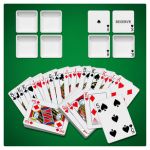
The premise of Solitaire is simple yet deeply engaging: players must sort a shuffled deck of cards into four foundation piles, one for each suit (hearts, diamonds, clubs, and spades), in ascending order from Ace to King. The game begins with a tableau of cards arranged in a specific layout, with some cards face-up and others face-down. Players must strategically move cards between the tableau, the foundation piles, and a draw pile to achieve the goal.
While the basic objective remains the same, there are numerous variations of Solitaire, each with its own unique rules and challenges. The most popular version, Klondike Solitaire, is the one most people are familiar with, thanks to its inclusion in early computer operating systems. Other popular variations include Spider Solitaire, FreeCell, and Pyramid Solitaire, each offering a fresh twist on the classic formula.
At its core, Solitaire is a game of patience, strategy, and problem-solving. Players must carefully plan their moves, anticipate future opportunities, and adapt to the randomness of the shuffled deck. The combination of skill and luck ensures that no two games are ever the same, making Solitaire a game that players can enjoy over and over again.
Solitaire is a turn-based card game that combines elements of strategy, logic, and chance. The gameplay revolves around organizing the cards in the tableau and moving them to the foundation piles in the correct order. Each move requires careful consideration, as one wrong decision can make it impossible to complete the game.
The core gameplay is built around three main elements: the tableau, the foundation piles, and the draw pile.
The tableau is the main playing area in Solitaire, consisting of seven columns of cards arranged in a cascading pattern. The tableau is where most of the gameplay takes place, as players move cards between columns to uncover hidden cards and create sequences.
Initial Setup: At the start of the game, the tableau is set up with seven columns. The first column contains one card, the second column contains two cards, and so on, with the final column containing seven cards. The top card in each column is face-up, while the rest are face-down.
Building Sequences: Players can move cards between columns to create descending sequences of alternating colors (e.g., a red 7 can be placed on a black 8). These sequences are used to uncover hidden cards and create opportunities to move cards to the foundation piles.
Uncovering Hidden Cards: When the top card of a column is moved, the card beneath it is revealed. Uncovering hidden cards is essential for progressing through the game and creating new moves.
Empty Columns: If a column becomes empty, only a King (or a sequence starting with a King) can be placed in the empty space. This rule adds an extra layer of strategy, as players must decide when and where to move Kings.
The foundation piles are the ultimate goal of Solitaire. Players must build four separate piles, one for each suit, in ascending order from Ace to King.
Starting with Aces: The foundation piles begin with Aces, which must be moved from the tableau or the draw pile. Once an Ace is placed in a foundation pile, players can add cards of the same suit in ascending order (e.g., 2, 3, 4, etc.).
Building the Foundations: As players uncover cards in the tableau and draw pile, they must decide when to move them to the foundation piles. While it’s tempting to move cards to the foundations as soon as possible, doing so prematurely can limit options in the tableau.
Winning the Game: The game is won when all four foundation piles are complete, with each pile containing all 13 cards of its suit in the correct order.
The draw pile contains the remaining cards that were not dealt to the tableau during the initial setup. These cards are drawn one at a time (or three at a time, depending on the rules) and can be used to create moves in the tableau or add to the foundation piles.
Drawing Cards: Players can draw cards from the draw pile when no moves are available in the tableau. The drawn card can be played immediately or held for future use.
Recycling the Draw Pile: In some versions of Solitaire, players can recycle the draw pile by reshuffling it and starting over. However, the number of times the draw pile can be recycled may be limited, adding an extra layer of challenge.
Strategic Use: The draw pile introduces an element of chance, as players must adapt to the cards they draw. Strategic use of the draw pile is essential for success, as it can provide the key cards needed to unlock new moves.
While Klondike Solitaire is the most well-known version, there are many other variations of the game, each with its own unique rules and gameplay mechanics:
Spider Solitaire: Players must build sequences of cards in descending order within the tableau, with the goal of clearing all cards from the board. Spider Solitaire is known for its increased difficulty and strategic depth.
FreeCell: In this variation, all cards are dealt face-up, and players can use four "free cells" to temporarily store cards. FreeCell emphasizes strategy and planning, as every game is solvable with the right moves.
Pyramid Solitaire: Players must remove pairs of cards that add up to 13 from a pyramid-shaped tableau. This variation combines elements of math and strategy, offering a unique twist on the classic formula.
TriPeaks Solitaire: Players clear cards from three overlapping peaks by selecting cards that are one rank higher or lower than the current card. TriPeaks Solitaire is fast-paced and easy to learn, making it a popular choice for casual players.
"Solitaire" offers a variety of features that make it a timeless and engaging game:
Solitaire’s enduring popularity can be attributed to its perfect balance of simplicity, strategy, and luck. It’s a game that challenges the mind while providing a relaxing and enjoyable experience. Whether you’re a casual player looking to pass the time or a dedicated enthusiast seeking to master the game, Solitaire offers something for everyone.
The game’s universal appeal, timeless design, and adaptability to digital platforms have made it a staple of gaming culture. From its origins as a physical card game to its modern digital iterations, Solitaire continues to captivate players around the world.
"Solitaire" is more than just a card game—it’s a timeless classic that has stood the test of time. With its engaging gameplay, endless replayability, and universal appeal, it offers players a chance to relax, strategize, and challenge themselves. Whether you’re building sequences in the tableau, uncovering hidden cards, or completing the foundation piles, every move in Solitaire is a step toward victory. So shuffle the deck, deal the cards, and experience the joy of this iconic game!
Embed this game
